
In the quiet streets of Sagaing City, Myanmar, life flowed with its familiar rhythm — scooters buzzed past shopfronts, chatter drifted from market stalls, and families shared stories over morning tea. But on one seemingly ordinary day, the ground beneath their lives betrayed them. This is a story of two shops, one street, and the razor-thin line between survival and collapse — a story that speaks not only of tragedy, but of resilience, awareness, and the choices we must make before disaster comes knocking.
It was a noon like any other in Sagaing City.
Ko Min, a shopkeeper in his late 40s, unlocked the steel gate of his small timber-and-masonry storefront. The shop had been in his family for three generations — originally a tea house, now a tiny convenience store selling snacks, SIM cards, and small household items. Across the street, a younger man, Aung Hlaing, waved as he flipped the sign on his GPS parts and mobile repair store.
“Morning, Ko Min!”
“Morning, Aung! Busy today?”
“Always,” Aung laughed, already answering a customer call on his phone.
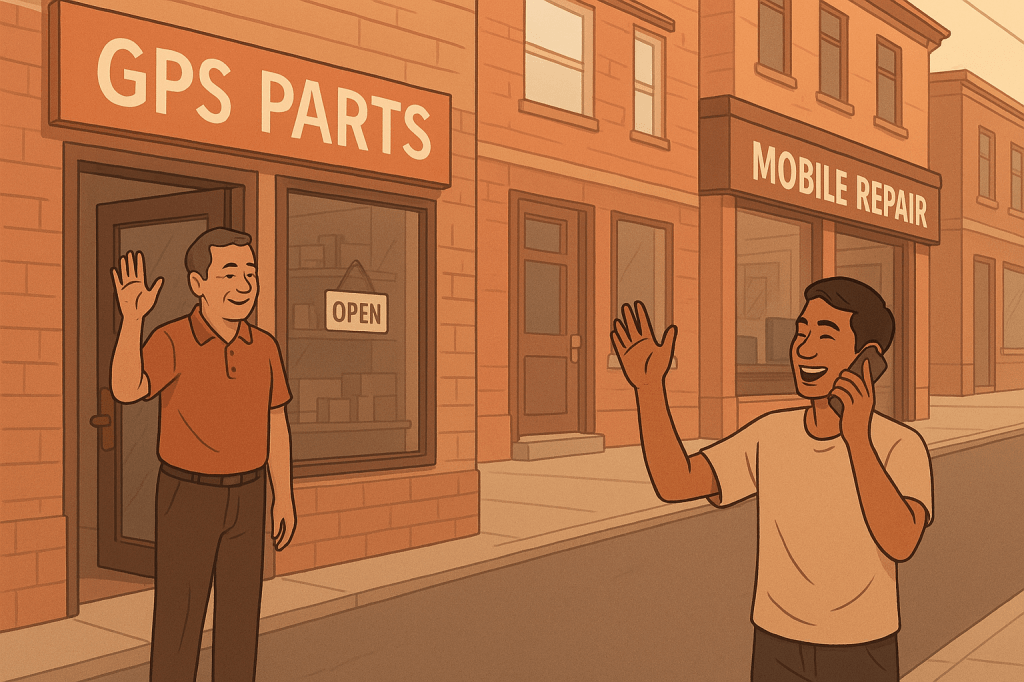
The street was peaceful. It sat less than two blocks from a fault line they’d all heard about but never truly feared. After all, nothing had ever happened before.
At 12:50 p.m., the earth roared.
Ko Min felt it before he heard it. A deep rumble beneath his feet — like a giant beast waking beneath the soil. The walls of his shop began to quiver. Glass bottles clinked violently on the shelves. His first instinct was to freeze. Then instinct kicked in: Drop. Cover. Hold. (Figure 1).
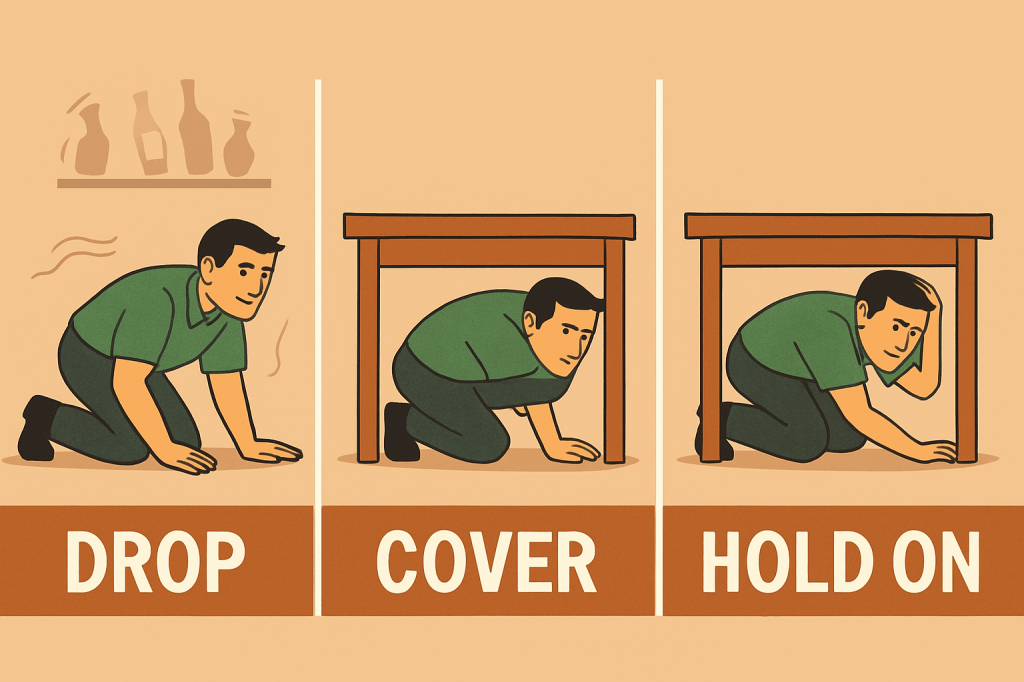
Figure 1: “Drop, Cover, Hold” earthquake safety steps illustrated in sequence.
Image generated by AI using OpenAI’s DALL·E model, April 2025.
Across the street, Aung wasn’t so lucky.
His brick building, though newer, lacked proper seismic reinforcements. Designed with aesthetics and cost in mind — not earthquakes — it groaned under the pressure of the shifting earth. With a deafening crack, the front façade crumbled. Windows burst. Dust filled the air like fog. (Figure 2)
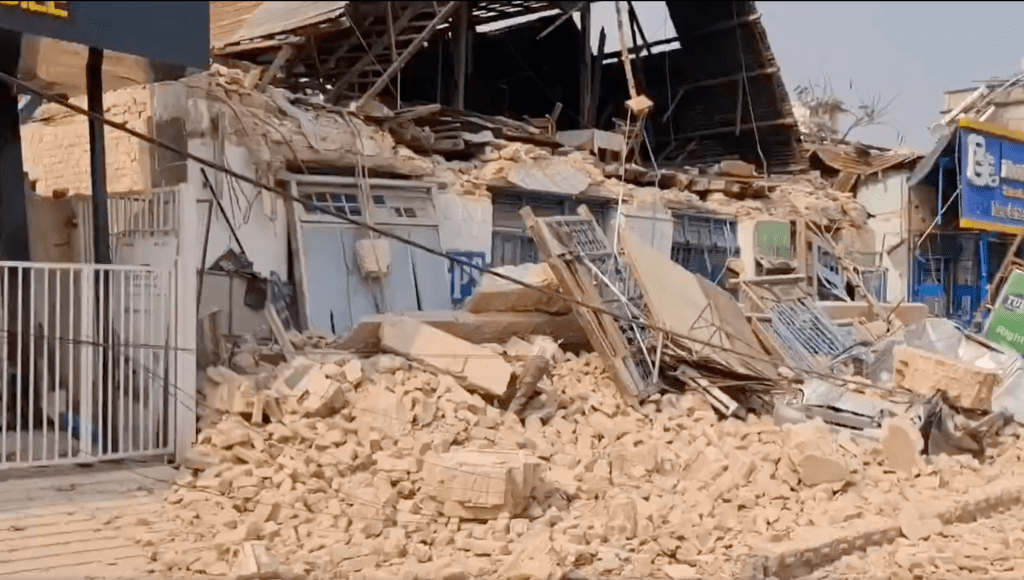
Figure 2: A brick masonry building that partially collapsed after the 2025 Myanmar Earthquake [1]. The building illustrates the vulnerability of unreinforced masonry in high seismic zones.
Ko Min’s building, traditional and sturdy with timber frames and braced masonry, suffered damage — a few bricks shedding near the doorframe. But it stood. (Figure 3)
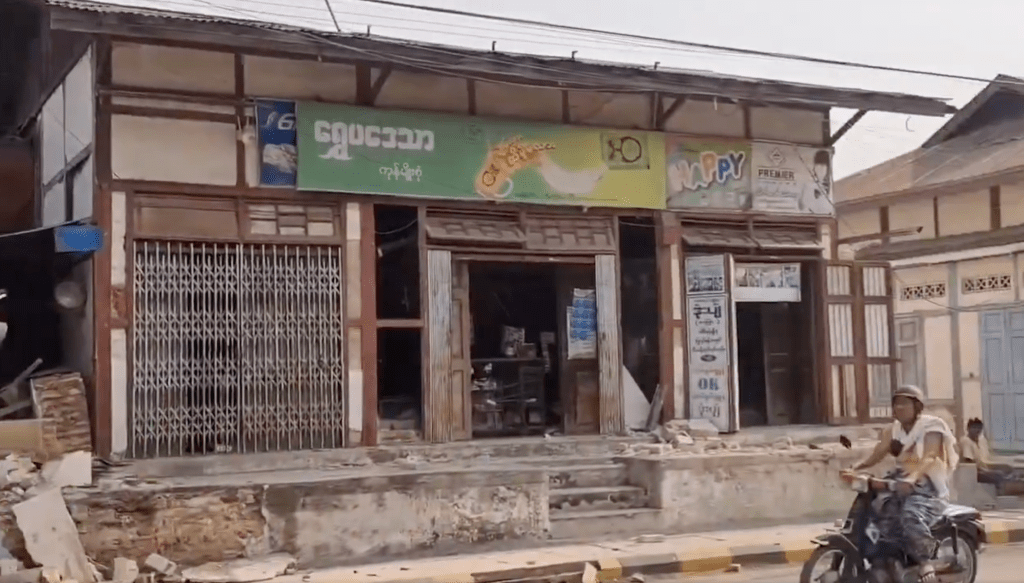
Figure 3: A traditional building with timber frames and braced masonry that withstood the 2025 Myanmar earthquake [1]. Though minor damage is visible—such as brick shedding near the doorframe—the structure remained standing, highlighting the resilience of hybrid construction techniques.
When the shaking stopped, a stillness more terrifying than the quake itself settled.
Ko Min ran out. Across the street, all he could see was rubble.
He leapt over shattered bricks, calling Aung’s name. Emergency teams hadn’t arrived yet — the city was overwhelmed. Neighbors were pulling debris with bare hands. Somewhere, a siren wailed. Ko Min clawed through the rubble, guided by instinct, until he heard a faint cough.
Aung had found shelter beneath a sturdy desk at the back. Bruised but breathing.
Ko Min held his hand as they waited for help, both men shaken, both men changed.
In the aftermath, engineers would note that Ko Min’s shop — modest, timber-reinforced, traditional — had survived because of its resilience to lateral movement. It had flexed where others broke. Across the street, the modern brick masonry store had partially collapsed due to the absence of critical reinforcements, brittle construction methods, and lack of disaster-compliant inspection.
Two shops. One street. Two very different outcomes.
This story is not just about a quake — it’s about the quiet choices we make before disaster strikes.
• It’s about knowing the risks and building accordingly.
• It’s about educating communities on safe building practices.
• It’s about evaluating older structures and enforcing building codes.
• It’s about volunteers, alarms, grab bags, and the wisdom of readiness.
At ZEVIZAR, we turn these stories into action. We provide tools that help communities:
• Assess their risks,
• Learn preparedness techniques,
• Simulate evacuation plans,
• And stay informed with real-time alerts.
Let Ko Min and Aung’s story be a reminder: the earthquake doesn’t choose. But preparedness can choose who survives.
Together, we can build streets where no building falls — and communities where no one is left behind.
Disclaimer: This post is part of a fictional narrative created for educational purposes. While it includes real geographical locations such as Sagaing City and references actual events like the earthquake and resulting damage, all characters and personal stories depicted are entirely fictional. The goal is to raise awareness and promote understanding of disaster preparedness and response through a realistic yet imagined scenario.
References:
- [1] @heungburma. (2025, March 28). Sagaing City was hit by a 7.7 magnitude earthquake today. About 80% of the city was destroyed. At least 50 people were confirmed dead and many are still trapped. [Tweet]. X. https://x.com/heungburma/status/1905986787698458947
 ZEVIZAR